Surfing Siargao on a Budget: What It Really Costs
Page summary
Surfing Here Costs Less Than You Think
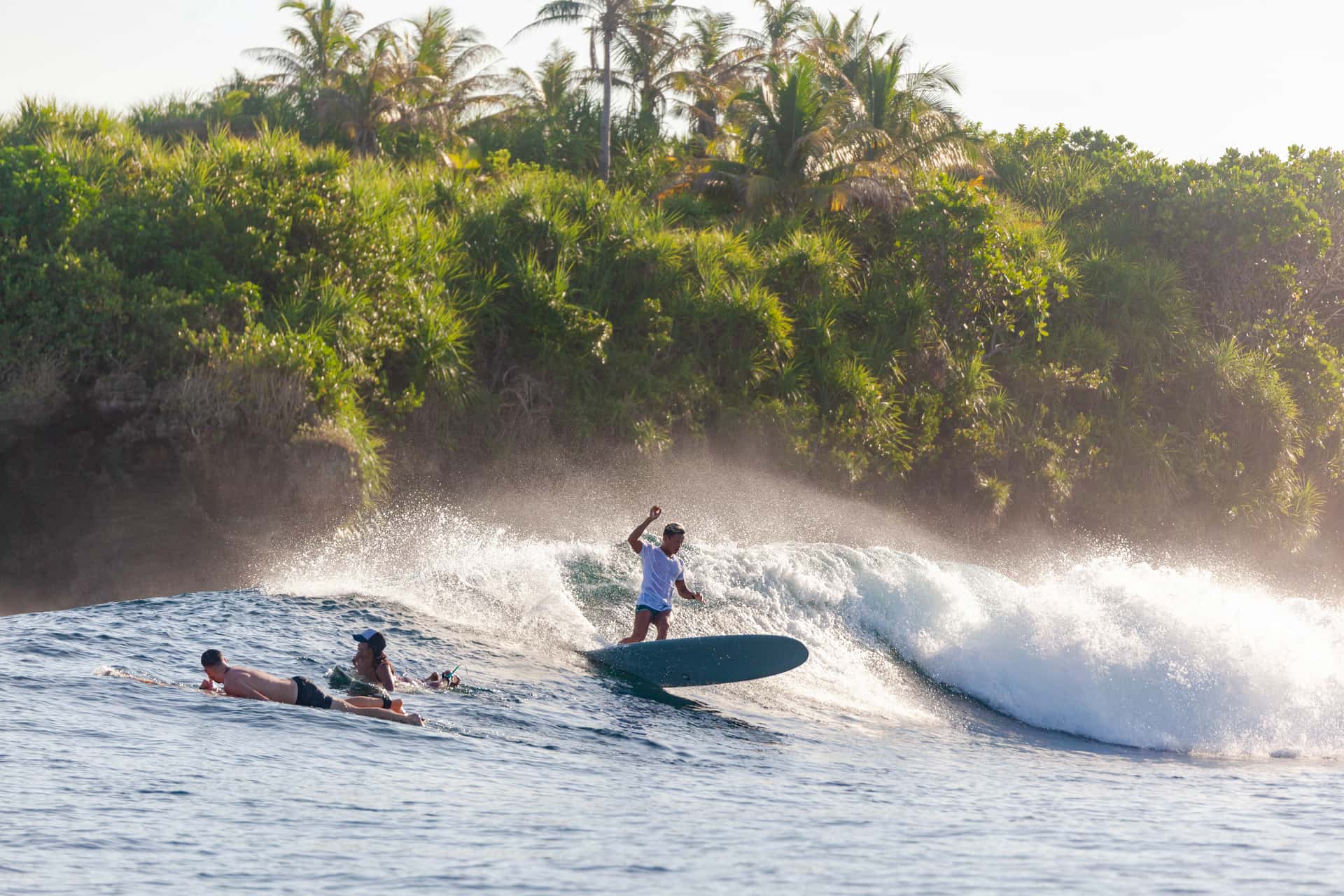
Siargao has a reputation as the expensive island, and for villas and private boats that is fair. Surfing is the exception. A morning in the water here costs less than a bar tab back home, and some of the best waves on the island are free to surf.
The money goes in predictable places: where you sleep, whether you rent a board or bring one, and how many boat rides you take. Get those three right and a week of surfing costs less than a long weekend almost anywhere else with waves this good.
Everything below is per person and in pesos, and it leaves out flights.
The Short Answer
Staying in a dorm, eating local, sharing a scooter and surfing the land-access breaks, a surf day costs roughly ₱1,200 to ₱2,200. Add a board at around ₱500 a day, or a lesson, or a boat trip, and you are nearer ₱2,500 to ₱3,500. That sits a little below the island general backpacker daily range, because surfing replaces the day tours most visitors spend their money on.
A week of surfing, done carefully, lands between ₱11,000 and ₱20,000 before flights. The full breakdown is further down.
Lesson or Board Rental
This is the first fork, and people get it wrong in both directions.
If you have never surfed, book a lesson. A one-on-one hour runs ₱500 to ₱1,000 with the board included, so it is cheaper than renting and far more useful. You will spend it in the whitewater learning to pop up, which is exactly where you should be. Our beginner guide covers the technique side.
If you already surf green waves, meaning you paddle into unbroken faces rather than pushing through foam, skip the lesson and rent. Board hire runs around ₱500 a day, so roughly ₱3,500 for a week, and it is always worth asking about a longer-hire rate. Renting here almost always beats flying a board across the world once you count the airline surfboard fee.
Be honest about which one you are. Plenty of people book a board when an hour with a coach would have saved them three days of bad habits.
What Each Break Costs to Reach
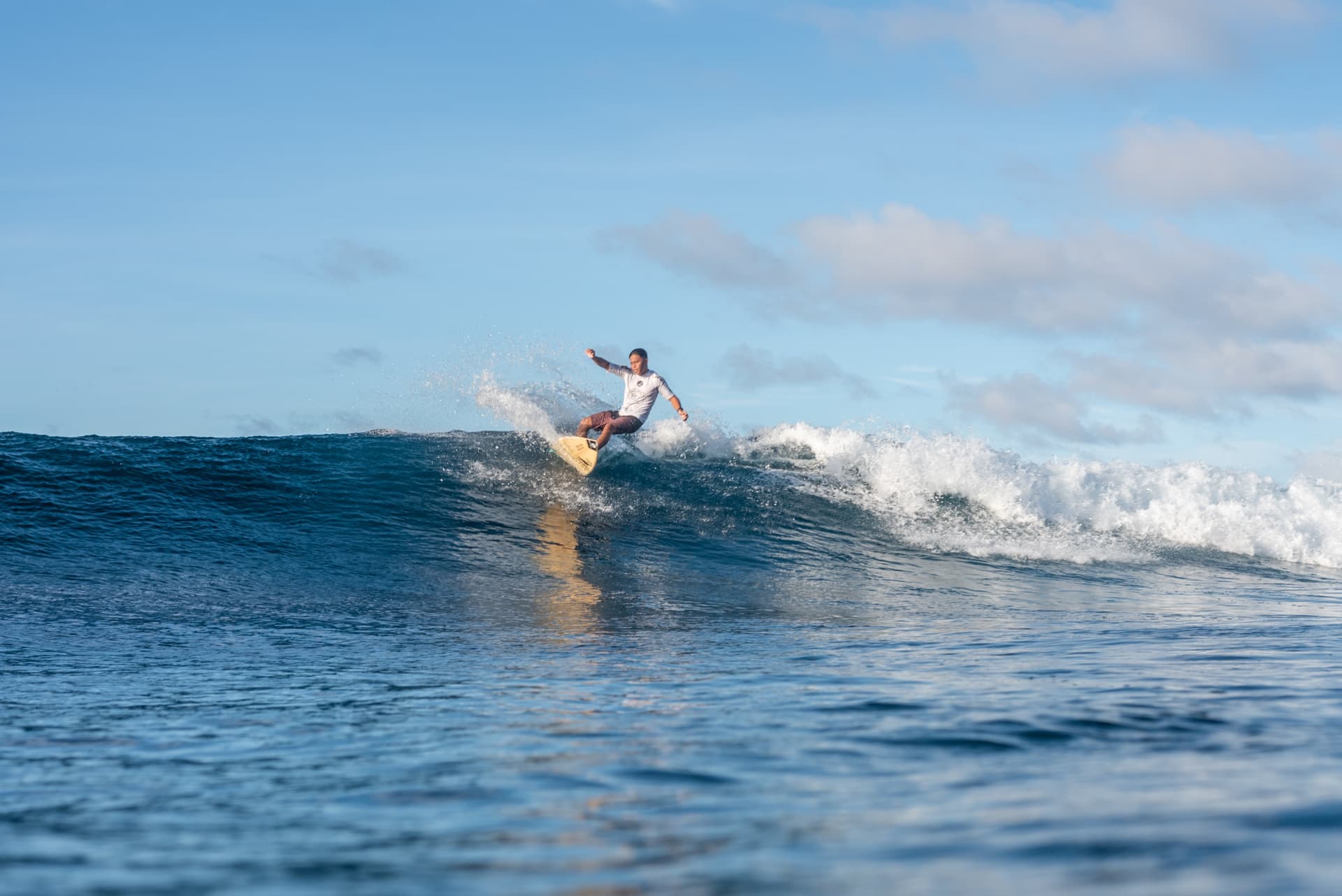
Here is the part nobody tells you. In Siargao the wave is free. The boat is not.
Roughly half the island best breaks are land access, so the only cost is fuel. The rest need a boat, and the fares add up fast if you are surfing twice a day.
Free, land access. Tuason is park and paddle. Guiwan is a fifteen minute ride west then a walk down. Pacifico is an hour north with a 160 metre paddle, and Tangbo is ninety minutes north. None of them charge a peso.
Small fee, walk in. Cloud 9 and Quicksilver are a ₱50 environmental fee and a short walk from the tower. Jacking Horse is a walk from the Cloud 9 pier with an entrance fee at the main gate.
Boat access. Cemetery is a five minute boat at about ₱150 round trip, or a free walk an hour either side of low tide. Rock Island and Stimpys run about ₱250 a head from Catangnan with a two passenger minimum. Salvacion is ₱150 to ₱200 plus a ₱20 fee. Daku is ₱800 to ₱1,500 for a half day split between up to six surfers, and Pansukyan can run to ₱1,500 for the boat.
Two things fall out of that. Boat fares are often per boat rather than per person, so a full boat is dramatically cheaper than a solo trip. Find people at your hostel. And most fares buy a fixed two hour session, so going at dawn when the wind is light gets far more out of the same money.
Conditions, hazards and tides for all thirteen breaks are in the Siargao surf guides.
The Gear You Actually Need
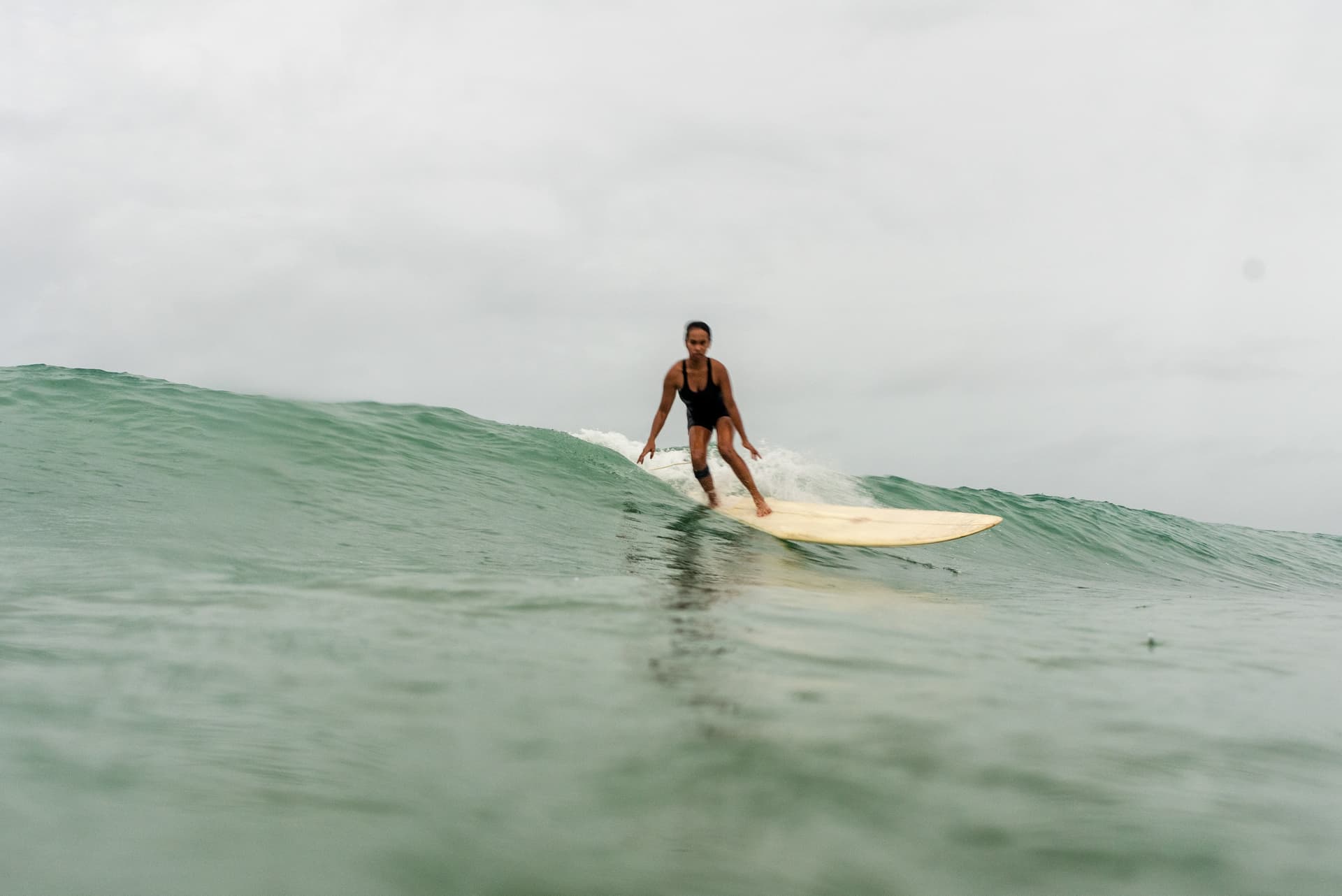
Short list, and most of it is cheap.
Tropical wax. The water here is warm, so cold-water wax slides straight off. Buy it on the island rather than bringing it.
A spare leash. The cheapest insurance in surfing. A snapped leash at a reef break turns a good session into a long swim.
Reef booties. Optional at the sandy learner spots, sensible almost everywhere else, because in Siargao you are usually surfing over reef.
A rash guard. Cheaper than the sunburn and it saves reapplying sunscreen every hour. Most lessons include one.
Skip the rest. You do not need a board bag for a rented board, and you do not need a wetsuit at all. Our packing list covers what else earns its luggage space.
Sleeping and Eating Near the Waves
A dorm bed runs ₱400 to ₱900 a night and a private room in a guesthouse sits around ₱1,200 to ₱2,500. For surfers the dorm earns its keep beyond the price, because by day two you will have people to split a boat with, which is the single biggest saving available. The where to stay guide breaks the areas down.
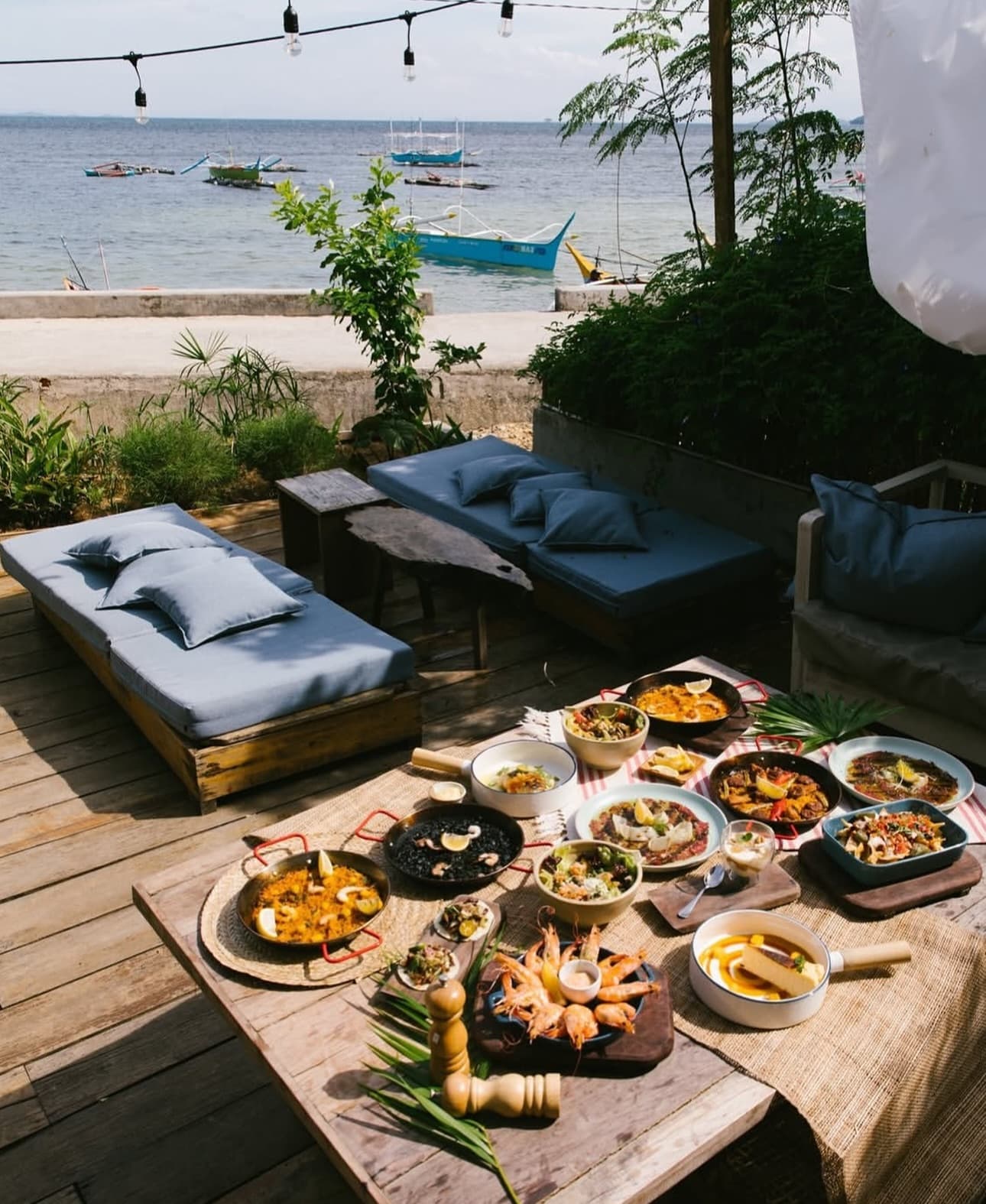
Eating is the easy part. A light carinderia meal is ₱100 to ₱200 and a cafe breakfast is ₱200 to ₱400. A few places sit right at the surf, which matters more than it sounds when you come in cold and hungry.
Shaka Cafe is beachfront looking straight at the Cloud 9 break, with smoothie bowls and cash or GCash only. Happy Islanders Surf Club is a surf school, shop and cafe in one on Tourism Road, so you can sort a lesson and eat in the same stop. Kanaway Snack Bar is on the sand in Catangnan next to the boats out to Stimpys and Rock Island, and Corner Cafe is on Tourism Road by the path down to Cemetery.
More in the restaurant guides.
Getting to the Breaks
A scooter is ₱350 to ₱600 a day plus around ₱100 in fuel, and longer hires are usually negotiable, so ask about a weekly rate if you are staying that long. Tricycles run ₱50 to ₱150 for short hops if you would rather not ride.
If you are renting a board for the week, a bike with a surfboard rack is the upgrade that changes the trip. Without one you surf whatever is walking distance. With one, Guiwan is fifteen minutes west and the whole north coast opens up, all of it free to surf. See the transport guide, or browse rentals on Koobo.
A Rough 7-Day Surf Budget
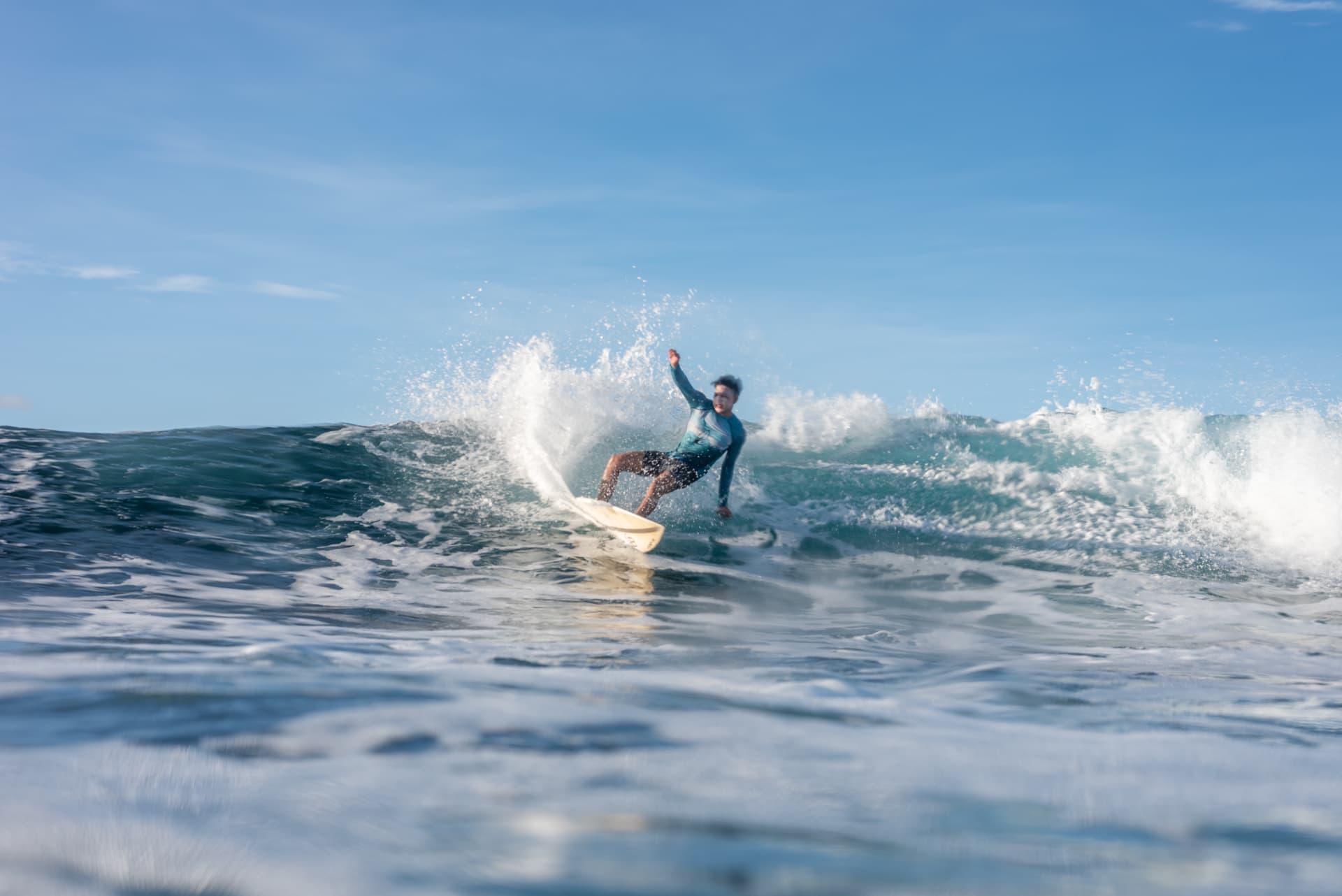
Both versions assume a dorm bed, local food, a scooter shared two up, and a mix of free and boat-access breaks.
The fixed costs. Seven nights in a dorm is ₱2,800 to ₱6,300. Food for the week is ₱4,200 to ₱6,300. A shared scooter with fuel is ₱1,400 to ₱2,500. Three boat sessions come to ₱450 to ₱750, and environmental fees add about ₱200.
If you are learning. Four lessons at ₱500 to ₱1,000 covers coaching and boards, so the week lands at roughly ₱11,000 to ₱20,000.
If you already surf. Board hire for seven days at ₱500 is about ₱3,500, which puts the week at roughly ₱12,500 to ₱19,500.
For comparison, that is the same ballpark as the general backpacker five-day total, except you spent the week surfing instead of on day tours.
Nine Ways to Surf Siargao Cheaper
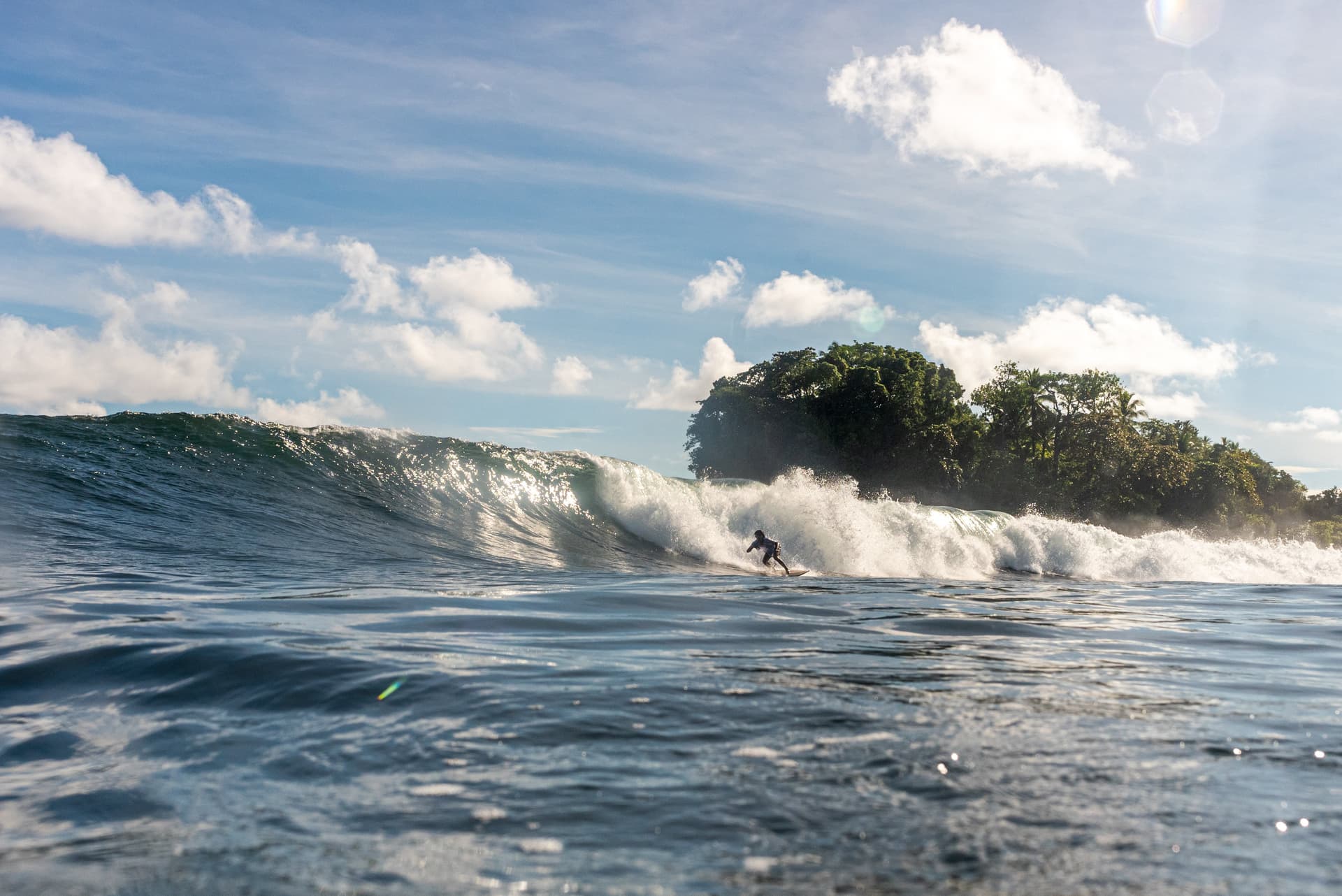
Surf the free breaks. Tuason, Guiwan, Pacifico and Tangbo cost nothing but fuel.
Fill the boat. Fares are often per boat, so six surfers to Daku is a fraction of the price of two.
Go at dawn. Cleanest conditions, thinnest crowd, and you get the most out of a fixed two hour fare.
Ask for a longer-hire rate. Daily rates add up fast on both scooters and boards, and a week is usually negotiable.
Rent a board instead of flying one. Airline surfboard fees usually cost more than a week of hire.
Take the lesson if you need it. An hour with a coach is cheaper than a wasted week.
Stay in a dorm. Cheaper bed, and you will find people to split boats and bikes with.
Walk to Cemetery at low tide instead of paying for the boat, an hour either side but watch out for sea urchins.
Come outside the September to November peak. Rooms and rentals cost more in peak season, and the smaller shoulder swells suit improvers better anyway. See the month-by-month guide.
Where Next
Pick your wave first and build the trip around it. The Siargao surf guides cover all thirteen breaks with conditions, hazards, crowds and access, and the 7-day surf itinerary turns that into a plan.
When you are ready, compare places to stay, surf lessons and rentals on Koobo.