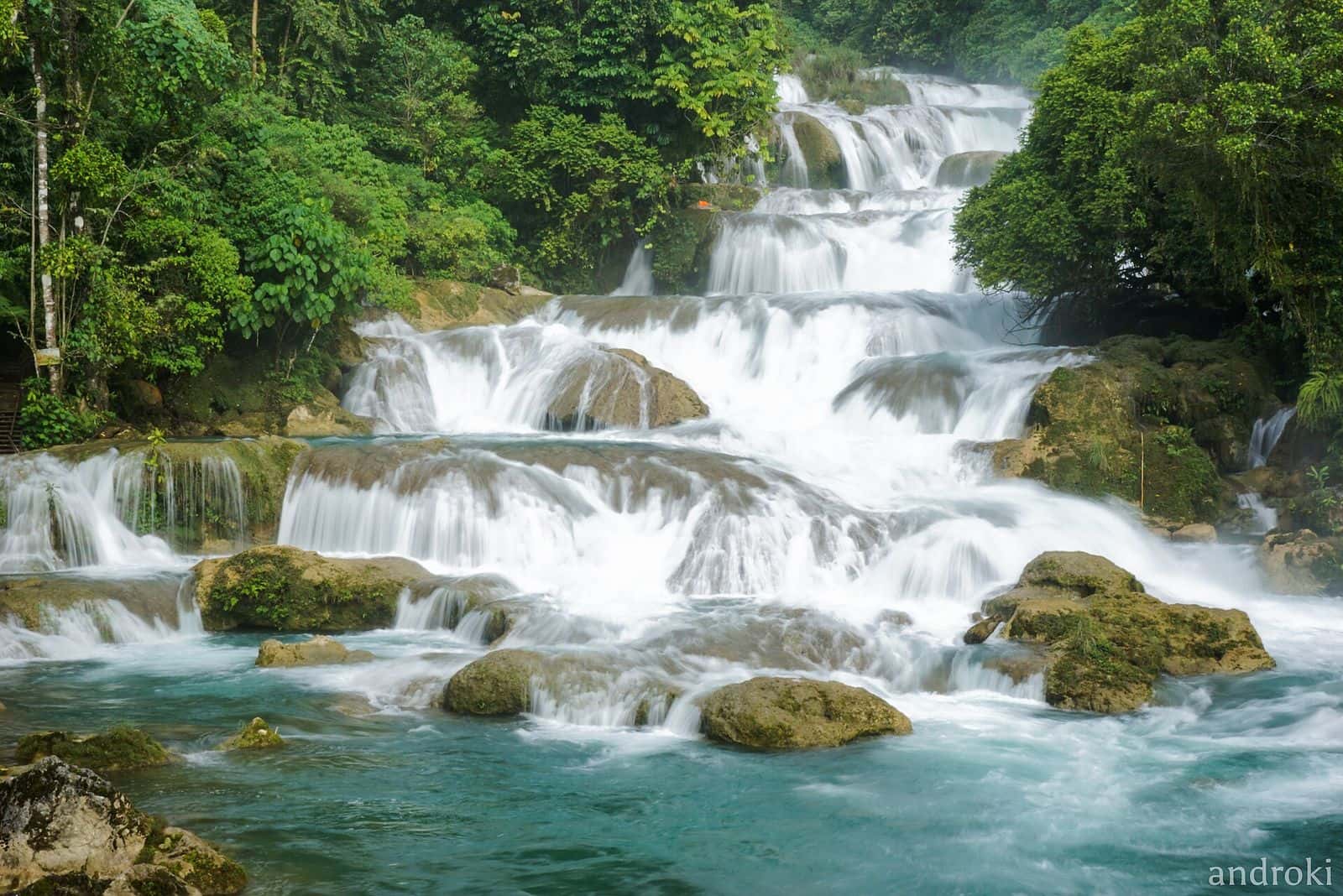
Aliwagwag Falls
Page summary
Aliwagwag Falls at a Glance
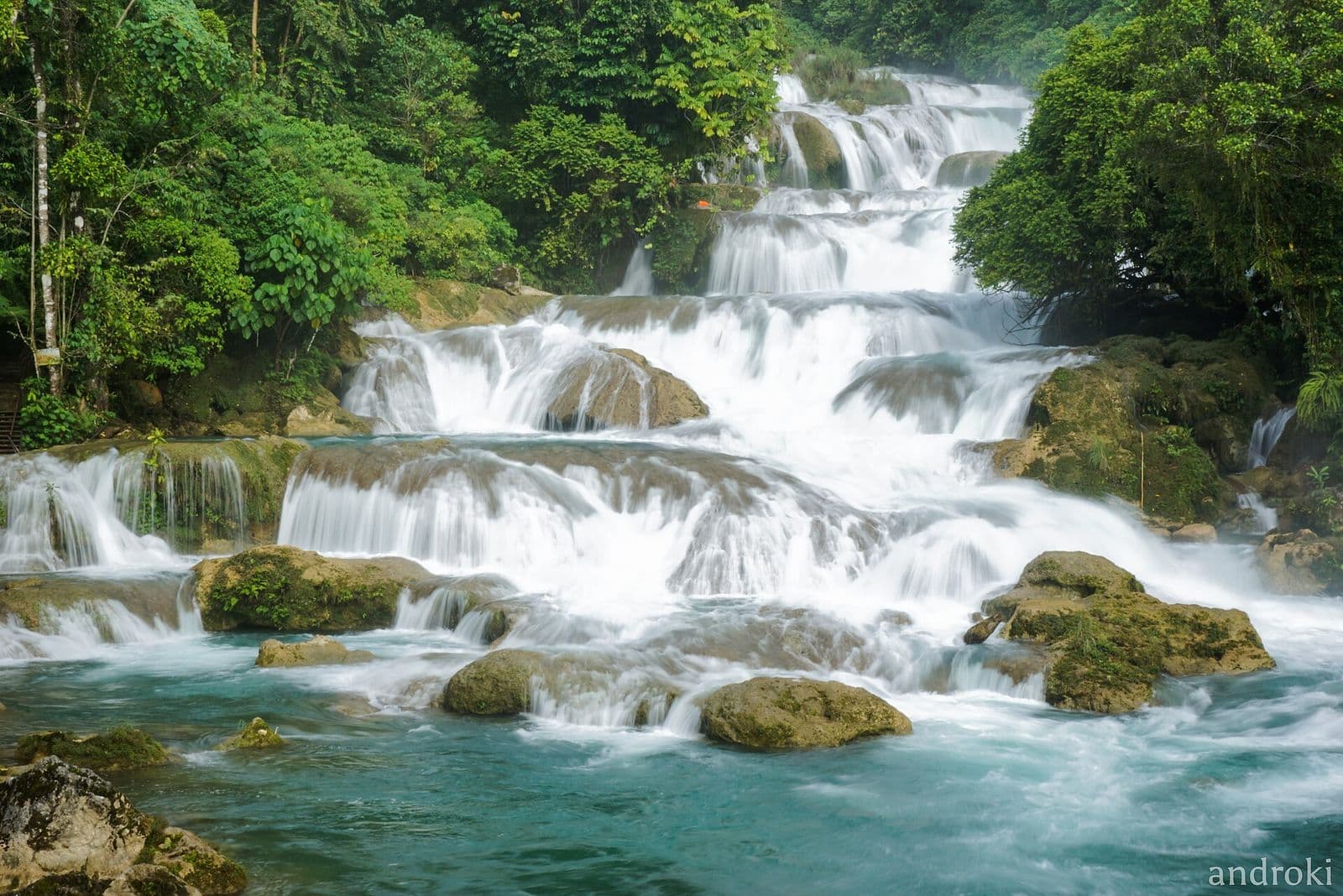
Aliwagwag Falls tumbles down the hills above Cateel, in northern Davao Oriental. The water drops down a long staircase of rock, usually counted as 84 steps, each from about 2 metres to more than 30 metres high. Add them together and the drop comes to around 340 metres, which is why Aliwagwag is often called one of the highest falls in the Philippines.
Prices, fees and schedules in this guide were checked in October 2026. They change often, so use them as a guide and confirm with the operator or venue before you go.
The falls sit inside the Aliwagwag Protected Landscape, declared in 2011 and later made a national park to protect the forested headwaters of the Cateel River. The area around the falls is run as the Aliwagwag Falls EcoPark.
Who It Suits
Aliwagwag is worth it if you have a spare day and your own transport. Families get a freshwater swim, photographers get the cascades, and the main viewing area is close to the road, so nobody has to hike far.
Skip it on a short Mati trip. Cateel is a long way up the coast, so this is a full day or an overnight, not something to squeeze in between Dahican and Pujada Bay.
How to Get There
Aliwagwag is about 24 km west of Cateel town, on the Compostela to Cateel road that runs through the protected landscape. From Cateel, habal-habal take you up to the falls in anything from 15 minutes to almost an hour, depending on the vehicle and the state of the road.
From Mati, it is a long drive north on the coast road, roughly 2 hours 45 minutes by car. Vans from Davao City to Cateel pass through Mati and take about 6 to 7 hours in total. A hired car or motorbike from Mati is the most flexible option. Leave early and check road conditions before you set off, especially after heavy rain.
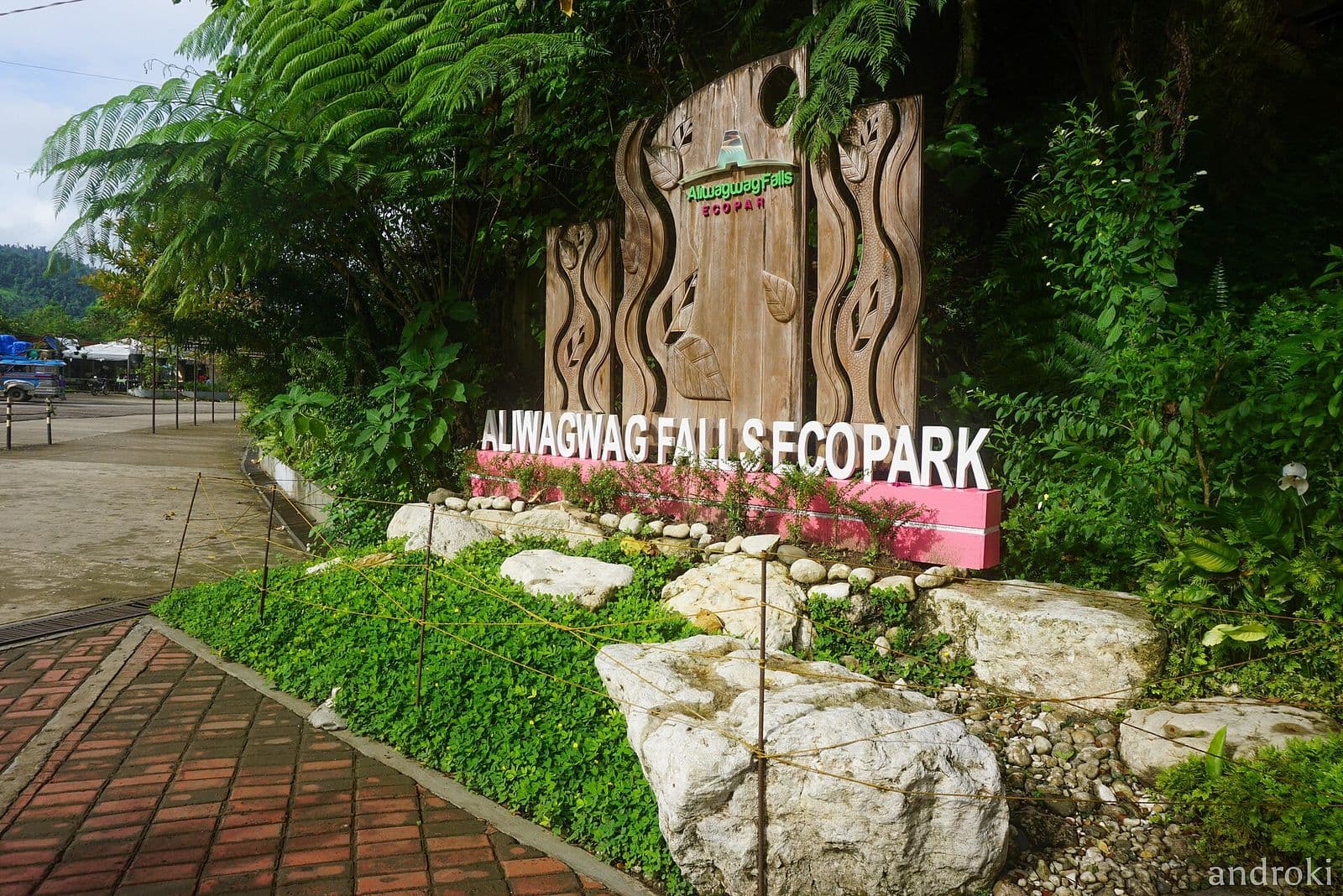
Photo: Andrew Gil Desabelle, CC BY-SA 4.0 via Wikimedia Commons
Entrance Fees
You pay at the eco park gate. The current rates are ₱100 for adults, ₱75 for seniors, ₱50 for ages 10 to 14 and ₱25 for under-10s. There is also a zipline for ₱200. Bring small notes.
What to Expect
The viewing areas look straight up the cascades, and a hanging bridge gives you another angle. How much of the rock is under water depends on recent rain.
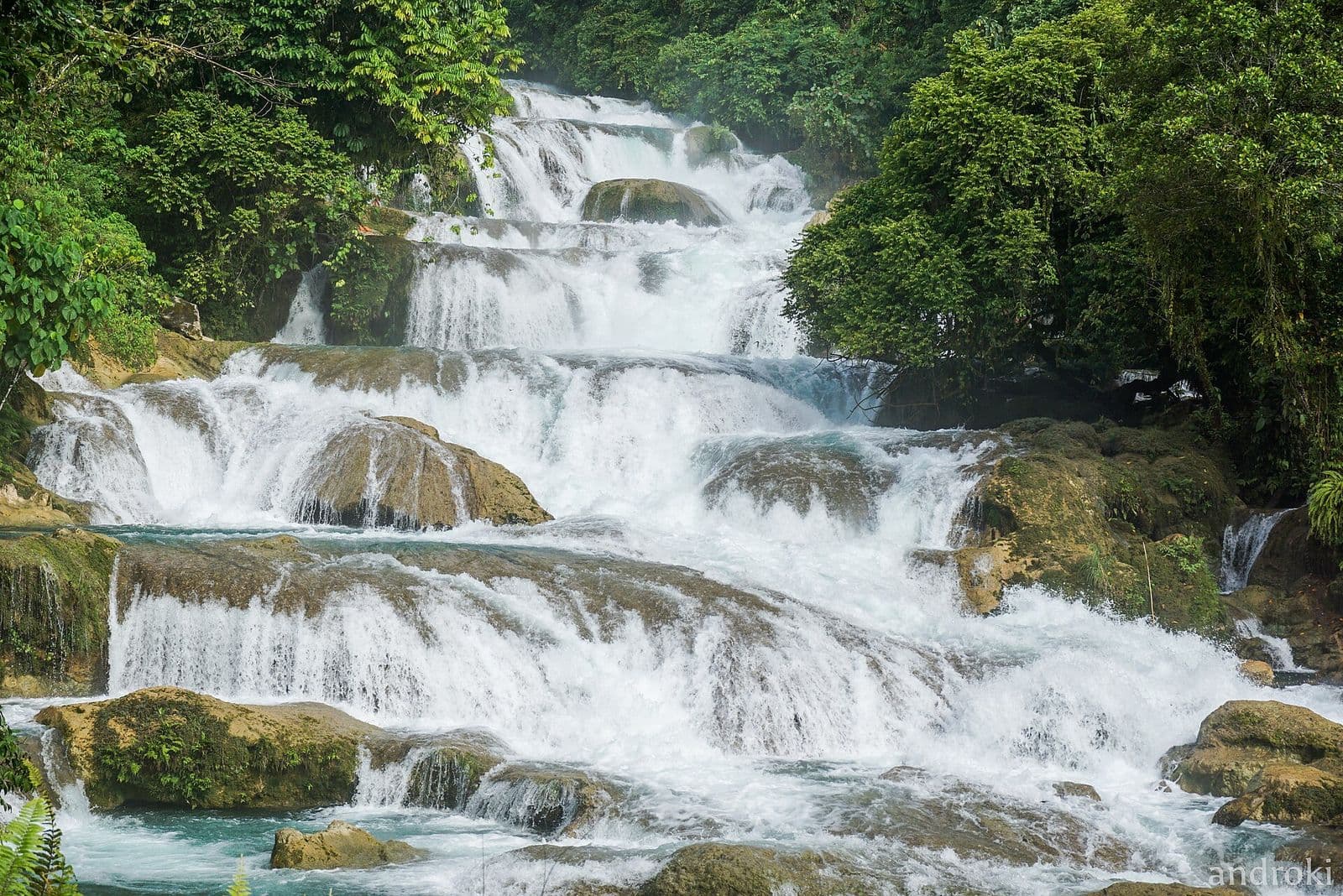
Photo: Andrew Gil Desabelle, CC BY-SA 4.0 via Wikimedia Commons
If you swim, stick to the areas staff point you to. The rocks are slippery, and after rain the current is stronger than it looks.
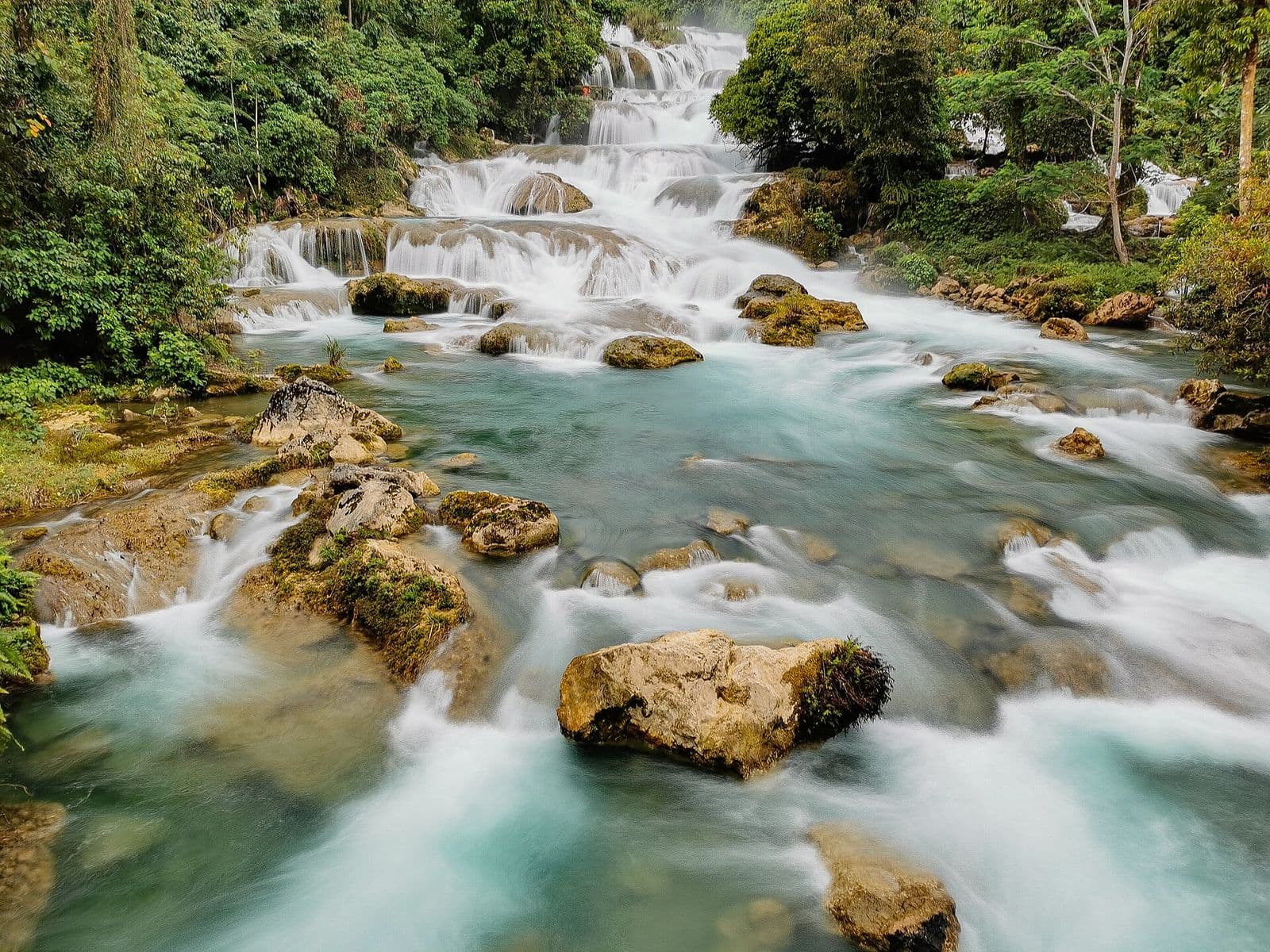
Photo: Aranaleltote, CC BY-SA 4.0 via Wikimedia Commons
Where to Stay
Most people either make a long day trip from Mati or stay a night in Cateel. The park inn has rooms from about ₱600 to ₱3,000, but beds near the falls are limited, so book ahead.
Best Time to Visit
The falls run all year. After a few dry weeks the water is clearer and the steps are easier to see. In heavy rain the river turns fast and brown, swimming may be stopped, and the road gets slower too.
Practical Tips
Start early
Leave Mati at first light. That gives you proper time at the falls and gets you home before dark.
Bring
Cash for fees and food, water, a change of clothes and shoes with grip. There is no mobile signal at the falls, so sort out your pickup and plans before you lose coverage.
Respect the park
This is a protected landscape. Stay in marked areas and take your rubbish home.
Aliwagwag Falls FAQ
Where is Aliwagwag Falls?
In Cateel, Davao Oriental, about 24 km west of Cateel town inside the Aliwagwag Protected Landscape.
How many steps does Aliwagwag Falls have?
It is usually described as having 84 steps, with a combined drop of around 340 metres.
How much is the entrance fee?
₱100 for adults, ₱75 for seniors, ₱50 for ages 10 to 14 and ₱25 for under-10s. The zipline is ₱200.
Can you do Aliwagwag as a day trip from Mati?
Yes, but it is a long day: roughly 2 hours 45 minutes each way by car. Leave early with your own transport, or stay a night in Cateel.
Explore Nearby
Back to the Mati travel guide. Also in Davao Oriental: Mount Hamiguitan and Cape San Agustin.