San Juan, La Union Travel Guide – Urbiztondo Surf, Food & Where to Stay
Page summary
San Juan: La Union's Surf Town
San Juan is the town most people mean when they say they're going to La Union. It sits on the coast just north of San Fernando, the provincial capital, and its barangay of Urbiztondo is where the surf schools, cafés, bars and most places to stay are packed along one long, sandy beach.
Prices, fees and schedules in this guide were checked in October 2026. They change often, so use them as a guide and confirm with the operator or venue before you go.
The reason it fills up is the wave. Urbiztondo is a gentle beach break over a mostly sandy bottom, one of the easiest places in the Philippines to learn. On a weekend morning the water is full of people standing up for the first time.
It's also busy. The national highway runs straight through town, the strip is built up, and on weekends the Manila crowd fills every café and every lineup. Come for the surf, the food and an easy trip, not a quiet beach.
This guide covers San Juan and Urbiztondo together, because that's where nearly everything you need is. For the rest of the province, start with the La Union travel guide.
Who Should Visit San Juan
San Juan is for beginners who want to learn to surf, groups of friends on a weekend away, and solo travellers after a social hostel. It also works for remote workers who want the sea within reach of Manila, especially midweek, when it's calmer and cheaper.
Skip it if you want a swimming beach. Urbiztondo is a surf beach, with currents, boards in the water and no lifeguards (see Practical Tips). And if you want calm, avoid the weekend.
Experienced surfers should come between October and March and head for Monaliza Point and the reef breaks rather than the beginner waves at Urbiztondo. Monaliza is crowded in season, so get out early.
How to Get to San Juan
From Manila
Partas runs from Pasay to San Juan in about six hours, with departures from 9am to 11:55pm and fares of ₱644 regular or ₱672 deluxe (August 2026). From Cubao, Super Deluxe and Luxury buses were ₱756 and ₱913 in January 2025, and fuel surcharges can add to any fare.
Most La Union buses end in San Fernando. To get off right at Urbiztondo, ride a bus bound for Vigan, Laoag or Abra (Partas, Viron or Fariñas) and tell the conductor you're stopping at San Juan.
From San Fernando
A jeepney north to Urbiztondo takes about 25 minutes and costs ₱11 to ₱15. A tricycle charter is about ₱100, agreed before you set off.
By car
About four hours from Manila without traffic via NLEX, SCTEX and TPLEX, with car tolls of around ₱980 each way. Weekend traffic adds a lot to that. Leave before the Sunday rush, because the trip back can take half a day.
There are no commercial flights into La Union at the moment, so fly into Manila or Clark. If you land at Clark, check whether any direct bus to San Juan is running. For every option, see how to get to La Union and the La Union travel guide.
Getting Around San Juan
Urbiztondo is walkable. The surf schools, cafés, bars and most stays sit along the beach road and the highway, a few minutes apart on foot.
For anything further, tricycles wait on the highway and rides within San Juan are often ₱15 to ₱50. Jeepneys run along the highway to San Fernando and the towns north. Agree tricycle fares before you get in, especially at night.
Take care walking along the national highway after dark. Traffic is fast and there isn't always a proper shoulder.
Where to Stay in San Juan
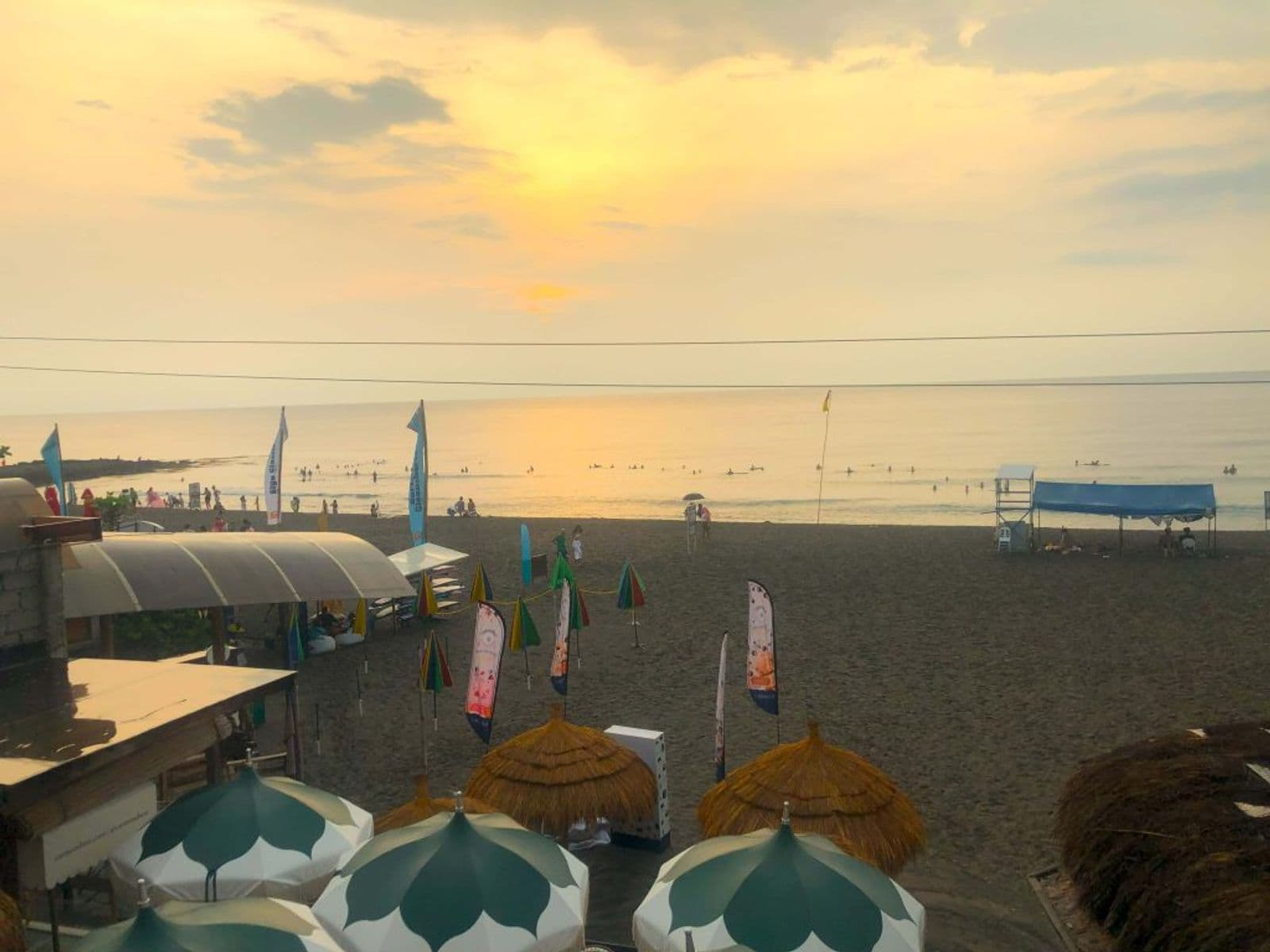
Photo: Kate and Mike's Travels
Beachfront in Urbiztondo
The easy choice: walk out to the surf in the morning and to dinner at night. This is where the surf camps, hostels and beachfront resorts are, and it's the loudest part of town on weekend nights.
Hostels and surf camps
Dorm beds run about ₱600 to ₱1,000, and many places run their own lessons. Flotsam & Jetsam is the best-known, a social hostel whose beachfront terrace doubles as one of the strip's main bars, with weekend parties going until about 1 or 1:30am. There are no under-16s in the dorms, and you'll want your own padlock.
The Circle Hostel started in Zambales in 2011, and its La Union branch has a coworking space. It can be noisy too, so pick your hostel by how much sleep you want.
Mid-range and resorts
Places a short walk inland, or a little north or south of the strip, are calmer and often cheaper. Little Surfmaid is a good mid-range pick at about ₱2,500 to ₱3,900. San Juan Surf Resort has listed rooms at ₱1,800 to ₱4,280, though that rate is older.
At the top end, Kahuna Beach Resort & Spa runs from about ₱7,450 on weekdays for a garden room to about ₱12,860 for an ocean-view suite, breakfast included, and its bunk house is ₱1,500 per person. Awesome Hotel is the other upscale beachfront option, at about ₱7,000 to ₱13,000 a night.
Book ahead for weekends
Friday and Saturday nights book out, especially on long weekends and in surf season. Weekdays are quieter and cheaper. For more options, see where to stay in La Union.
Where to Eat in San Juan
San Juan has more good food than a surf town this size should, most of it along the Urbiztondo strip. Typhoon Emong hit the town hard in late July 2025, and places change often anyway, so check a spot is open and check hours before you head out. Some restaurants add a service charge, so read the menu.
Coffee
El Union Coffee has been the café in Urbiztondo since 2013, known for its cold brew. It ranked #61 on the World's 100 Best Coffee Shops list in 2025 and was nominated again for 2026, and the queue shows it. Get the grilled cheese (₱290), and if downstairs is full, head up to El Union Taas.
Clean Beach is the beachfront alternative: solar-powered and pet-friendly. Bring back a basket of beach trash and your drink is free. The Kaya toast is ₱220.
Local food
Miryinda's crispy pork kare-kare with bagoong rice (₱250) is the dish people queue for, and it often sells out by late afternoon, so go before noon. It's closed Tuesdays and Wednesdays.
Tagpuan sa San Juan is the budget spot, with rice bowls at about ₱70 to ₱120 and good bagnet, and it's closed Tuesdays. For Ilocano cooking, Makan at Eliseos does steak dinakdakan and shrimp dinengdeng.
Sunset and dinner
The beachfront bars along Urbiztondo face west, so sunset is when the strip is at its best. Arrive early on weekends if you want a seat on the sand. Kermit does pizza with sunset views and usually a wait, and Gefseis Greek Grill does souvlaki and grilled octopus.
Sabong Fried Chicken is known for its honey-bagoong chicken. Mad Monkeys is a burger restaurant, not the hostel chain: the Amboy Burger is ₱300, there's a 5% service charge, and it's closed Tuesdays and Wednesdays.
What to order
Look for Ilocano dishes alongside the international menus: bagnet (crispy deep-fried pork belly), pinakbet (vegetables cooked with shrimp paste), dinakdakan, and Ilocos empanada with its bright orange rice-flour crust. For halo-halo, Halo-Halo de Iloko in nearby San Fernando is the province's best-known, made with 12 local ingredients. Check it's open before you make the trip.
Things to Do in San Juan
Take a surf lesson
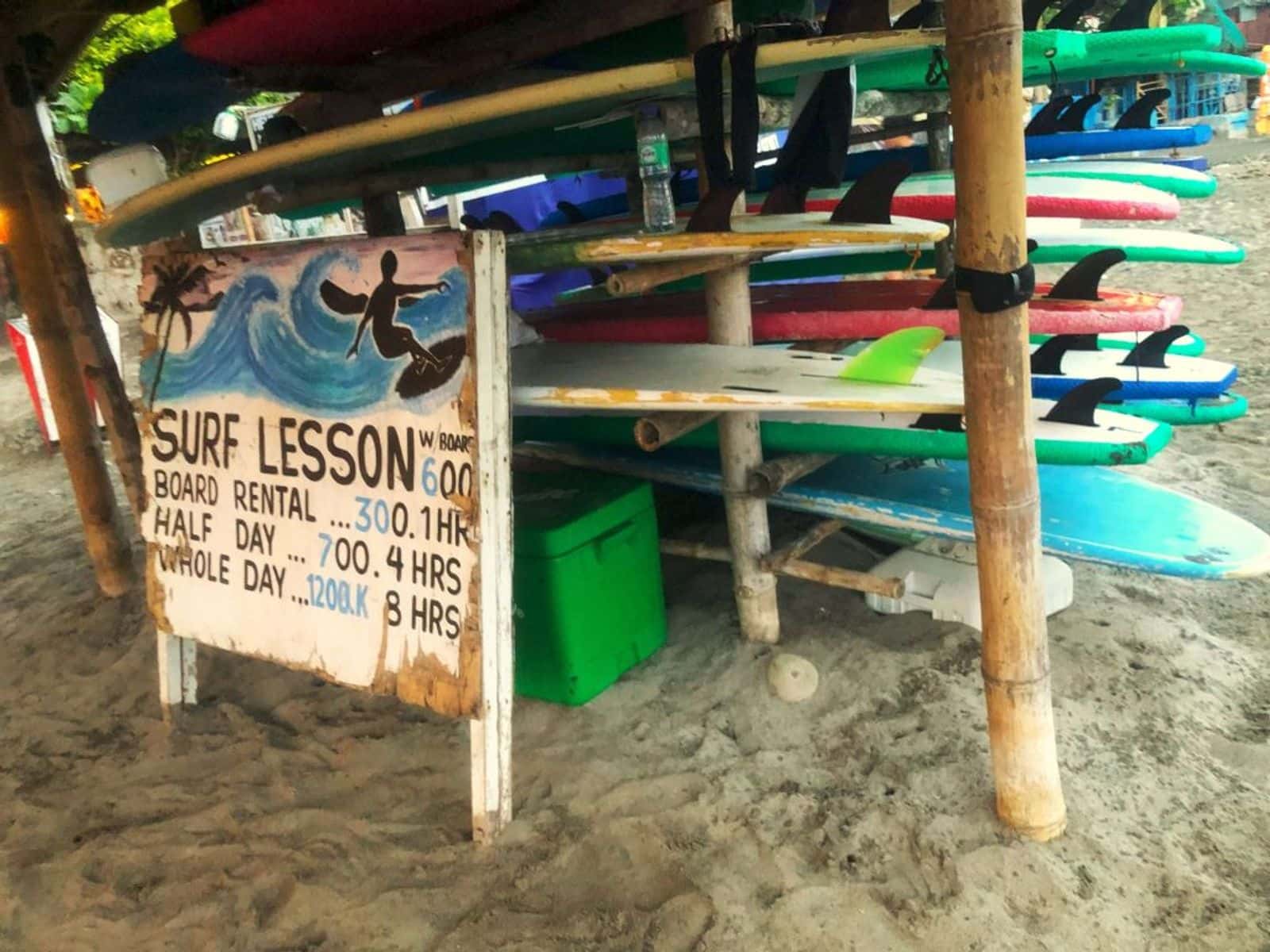
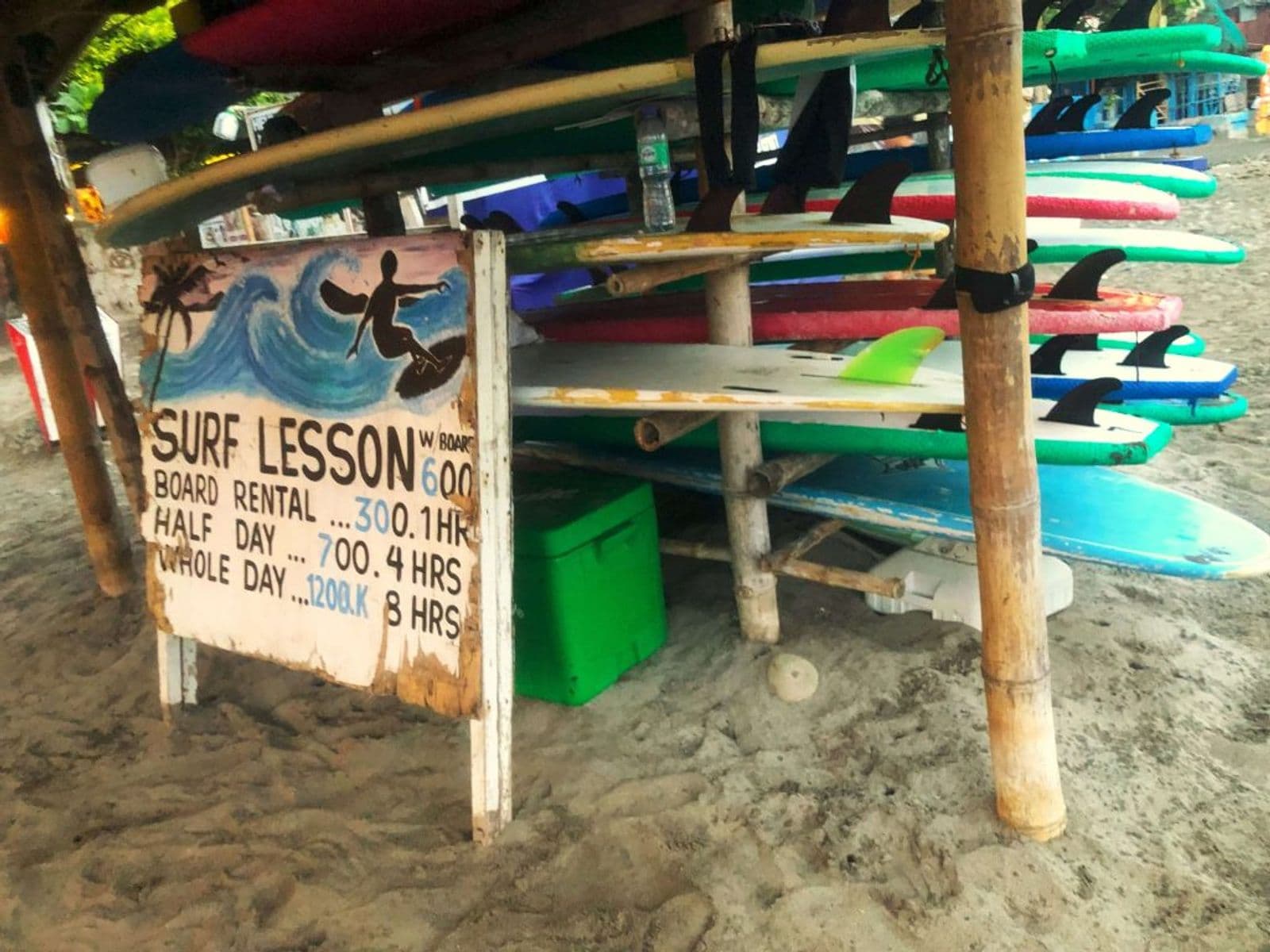
The main event. A one-hour lesson with an instructor and board is usually ₱400 to ₱500, and most beginners stand up in their first session. Schools set their own prices, so ask before you start, and expect board rental alone to be around ₱250 to ₱300 an hour. See surfing in La Union for beginners.
Watch the sunset
Urbiztondo faces west across the sea, and at sunset the whole beach turns out. No booking or fee needed.
Go out at night
San Juan has the province's only real nightlife. Bars along the Urbiztondo strip run late on weekends, with beachfront terraces, live music and bonfires on the sand. Weekdays are much quieter.
Festivals and events
San Juan's Danggayan Festival brings street dancing and a float parade. The provincial government lists it for 21 to 23 December, alongside the town fiesta, though some years have also held festival events in May. Check the dates before planning around it.
The La Union Surfing Break is the big surf event of the year, usually held in late October or over the All Saints' long weekend. The 2025 edition ran from 24 October at Waves Point in Panicsican, San Juan, and in Bacnotan. The 2026 dates hadn't been announced when we checked.
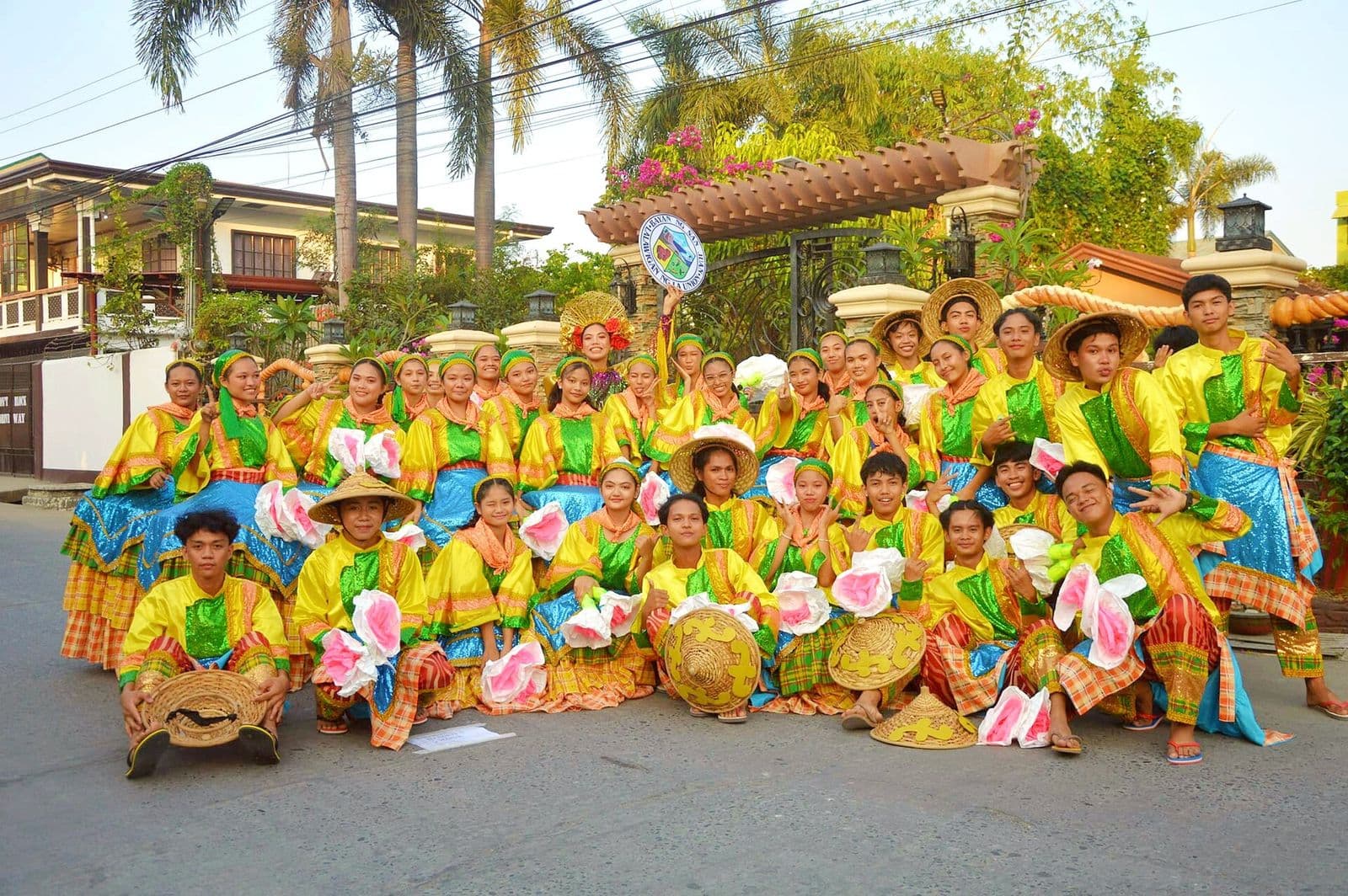
Photo: Touri60, CC BY-SA 4.0 via Wikimedia Commons
Day trips
Tangadan Falls is the nearest waterfall trip. San Fernando is 25 minutes south for Ma-Cho Temple and the Pindangan Ruins. North, Luna has pebble beaches and the Baluarte watchtower, and Immuki Island in Balaoan has natural rock pools.
Surf in San Juan
Urbiztondo: the learning beach
A long beach break over a mostly sandy bottom, with soft waves that suit beginners. Lessons run from the sand all along the beach. It works for most of the year, and it's at its most crowded on weekends.
When the waves are biggest
October to March is the main season, when the amihan blows offshore, with December and January the peak and the most crowded. That's the time for experienced surfers, but it can be a lot for a first lesson. From July to September the habagat brings onshore wind and typhoon risk, but the small waves suit beginners.
For experienced surfers
Monaliza Point, a right-hand reef break in San Juan, is the next step up from Urbiztondo and suits intermediates and above. It needs the bigger swell of the main season and gets crowded. Urbiztondo itself hosted the WSL La Union International Pro longboard event in January 2026. See Monaliza Point and the surf breaks.
Best Time to Visit San Juan
October to March
The surf season, with bigger waves, mostly dry weather and the busiest weekends. December and January are the most crowded.
April and May
Hot and dry with smaller waves, good for beginners. Holy Week is one of the busiest weeks of the year.
June to September
The rainy season, with a chance of typhoons that can run into October. It's quieter and cheaper. Check PAGASA, the national weather service, before you travel.
Go midweek if you can
The biggest difference to your trip isn't the month but the day. Monday to Thursday, San Juan is relaxed, cheaper and the lineup has space. Friday to Sunday, it's full. See the best time to visit La Union for more.
Practical Tips for San Juan
Urbiztondo is a surf beach, not a swimming beach
Take this one seriously. Rip currents are common, boards are in the water, and there are no lifeguards. If you're not surfing, stay close to the shore and away from the surfers.
Taboc, a nearby barangay, is the usual suggestion for calmer water, though conditions there change too. Ask your accommodation or a surf school when you arrive.
If you're caught in a current
Don't swim against it. Swim parallel to the shore until you're out of it, then head back in. If you can't, float and signal for help, and never swim alone.
Environmental fee
San Juan charges tourists a ₱50 environmental fee that funds waste management, paid by GCash QR at more than 200 participating businesses or at one of six fee hubs. Ask where you're staying how it's handled for you. The viral "₱50 plus ₱600" fee story was about Pagudpud, not San Juan.
Payments
GCash works almost everywhere in Urbiztondo, and larger places take cards. Carry cash for tricycles, jeepneys and small eateries, and for day trips to Tangadan Falls and Immuki Island.
Surf etiquette
Learn in the lesson zones, don't paddle into the middle of a crowded lineup, and give way to the surfer closest to the breaking part of the wave. On a busy weekend this matters for everyone's safety.
San Juan FAQ
Is Urbiztondo the same as San Juan?
Urbiztondo is a barangay of San Juan, La Union, and it's where the surf beach, schools, cafés and most places to stay are.
Can you swim at Urbiztondo Beach?
It's a surf beach with common rip currents and no lifeguards. Non-surfers should stay near the shore, away from the surfers, or try calmer water nearby such as Taboc.
How much is a surf lesson in San Juan?
Usually ₱400 to ₱500 for an hour with an instructor and board, though schools set their own prices. Board rental alone is around ₱250 to ₱300 an hour.
Is San Juan good for beginners?
Yes. Urbiztondo's sandy beach break and its many surf schools make it one of the best places in the Philippines to learn.
How far is San Juan from San Fernando?
About 25 minutes by jeepney north along the national highway, for ₱11 to ₱15.
When is San Juan busiest?
Every weekend, plus long weekends, Holy Week and the surf season from October to March. Midweek is much quieter.
Explore Nearby
For the wider province, start with the La Union travel guide. If you already surf, read Monaliza Point and the surf breaks, and for a ready-made plan, try the La Union itinerary.
South, San Fernando has the heritage sights and Bauang the grape farms. North, Bacnotan has quieter surf, Luna its pebble beaches, and Immuki Island its rock pools. Inland, Tangadan Falls is the main waterfall day trip.