
Siquijor Travel Guide

Page summary
Siquijor at a Glance
Siquijor is a small island province in Central Visayas, south of Cebu and east of Negros. One coast road of about 72 to 75 km loops the whole island, and most people ride it in a day or two on a rented scooter. Six towns sit on that road: Siquijor (the capital and main port), Larena, Enrique Villanueva, Maria, Lazi and San Juan.
Prices, fees and schedules in this guide were checked in October 2026. They change often, so use them as a guide and confirm with the operator or venue before you go.
People come for the waterfalls, the west-coast sunsets and a pace that is noticeably slower than Bohol or Cebu. The island's reputation for folk healing gets far more airtime online than it does on the ground. In practice your days here are swimming, riding the coast road and eating at small places by the sea.
This guide covers the whole island. For detail on each town and the main sights, use the area and attraction guides linked at the bottom.
Who Siquijor Suits
Siquijor is for people who like to set their own pace. The island is small enough to ride around without a plan, and most sights cost ₱20 to ₱50 to get in. Couples, solo travellers, divers and snorkellers do well here, and it makes a good quiet stretch after a busier few days in Cebu or Bohol.
Skip it if you want nightlife, a long list of restaurants or long white-sand beaches. Many beaches are rocky or turn shallow at low tide. Getting here also takes a boat or a limited flight schedule, so it is a poor fit for a single overnight.
How to Get to Siquijor
Most people still arrive by sea, through one of two ports: Siquijor Port in Siquijor town, or Larena Port on the north coast. Check which one your ticket names, because it changes how far you ride to your room. There are no ferries on 25 December, 1 January or Good Friday, so don't plan to arrive or leave on those days.
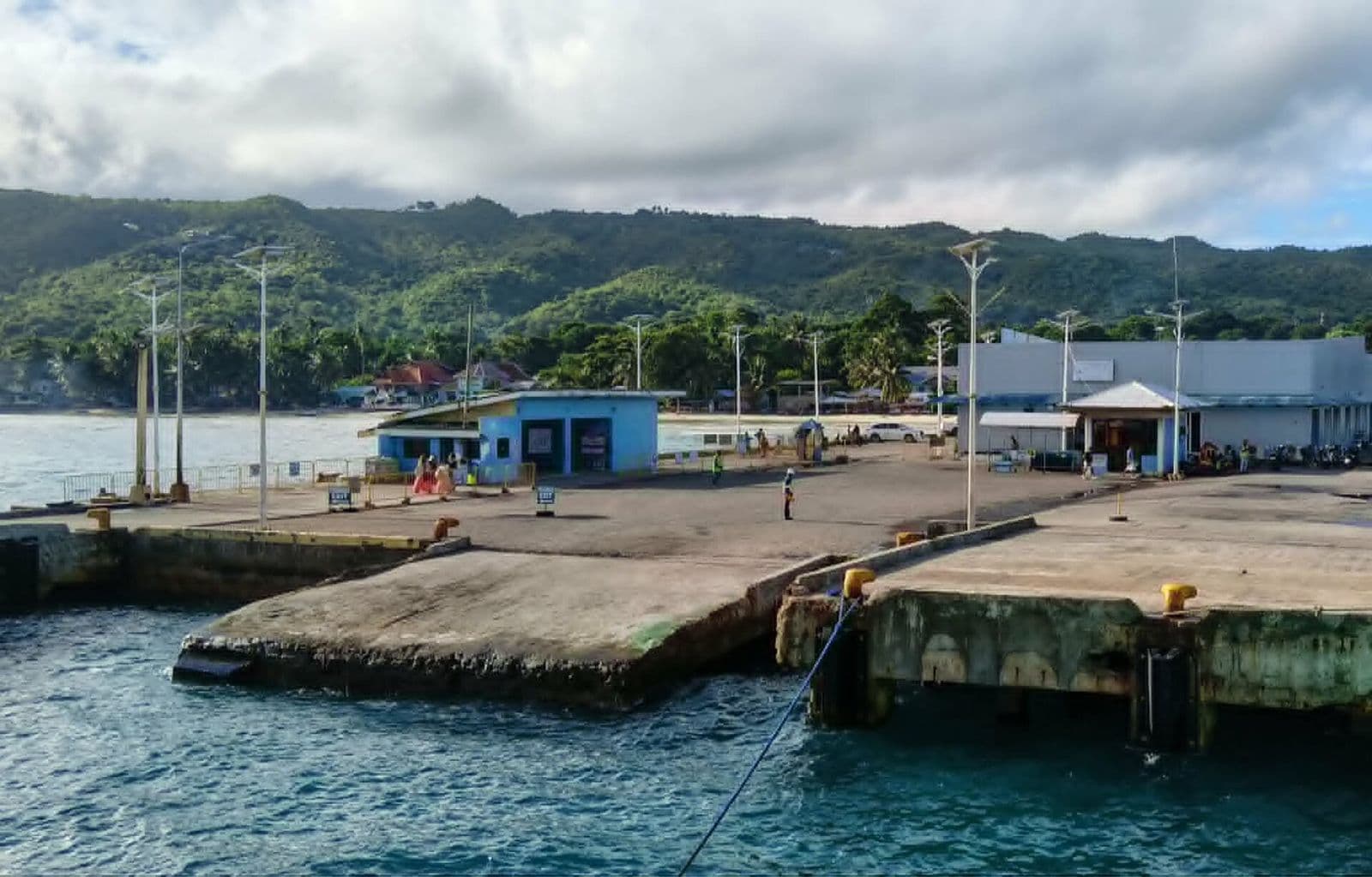
Photo: Kingprince2424, CC0 via Wikimedia Commons
From Dumaguete (the usual route)
Dumaguete, on Negros, is the closest gateway, with flights from Manila and Cebu. A tricycle from the airport to the port takes 15 to 30 minutes and costs ₱120 to ₱150. OceanJet runs about five fast crossings a day to Siquijor Port, taking 30 to 50 minutes. Since 21 September 2026, with a temporary fuel surcharge, the fare is ₱420 tourist class and ₱700 business.
Montenegro Lines and other operators run slower boats of about an hour to an hour and a half, some of them into Larena. Their fares vary by source, so confirm at the port. In 2026 OceanJet has cancelled its earliest trips several times during fuel shortages, so check the day's schedule rather than counting on the first boat.
From Tagbilaran, Bohol
OceanJet runs twice a day from Tagbilaran, at 7:30am and 3:20pm, in about 2 hours. Since 21 September 2026 the fare is ₱960 tourist class and ₱1,440 business. This is the easiest way to pair Siquijor with Bohol.
From Cebu City
OceanJet's Cebu service leaves at 5:10am and 1:00pm and stops in Tagbilaran, where you stay on board. It takes about 4 hours, and at September 2026 fares it works out at roughly ₱1,920 tourist class end to end. The slow option is Lite Ferries from Cebu Pier 3 to Larena on Monday, Wednesday and Saturday at 1:00pm, arriving around 11:00pm, or Starlite's Friday night sailing. Those fares run ₱635 to ₱920.
Flying from Cebu
Sunlight Air has flown nonstop from Cebu to Siquijor since December 2025. Flights run three times a week on an ATR 72, take about 55 minutes and start from ₱488 one way before taxes, with 7 kg of carry-on included. The schedule has already changed once, so check it before you book. The airport is closest to Siquijor town and Larena, and tricycles wait outside.
The departure fee
You pay the island fee when you leave, not when you arrive. Since 1 February 2026 the province has collected a Tourism Ecological Fee of ₱50 per person at booths outside the Siquijor Port ticketing building and at the airport departure area. Seniors and students pay ₱40, and children aged 6 and under and residents with ID are free.
Carry your passport or ID, since OceanJet tickets are issued in your name, and arrive about an hour before departure. Buying at the counter avoids OceanJet's 10% online booking fee. Holy Week and Christmas to New Year are the busiest times, so book boats one to two weeks ahead then.
Getting Around Siquijor
Rent a scooter. Most cost ₱300 to ₱500 a day for a standard automatic, more for a bigger bike, plus a deposit that is often around ₱300. Rental stands wait at Siquijor Port when boats come in. Helmets are required by law, most travel insurance won't cover a crash without a valid motorcycle licence, and the inland roads to the falls have steep, broken sections, so ride within your experience.
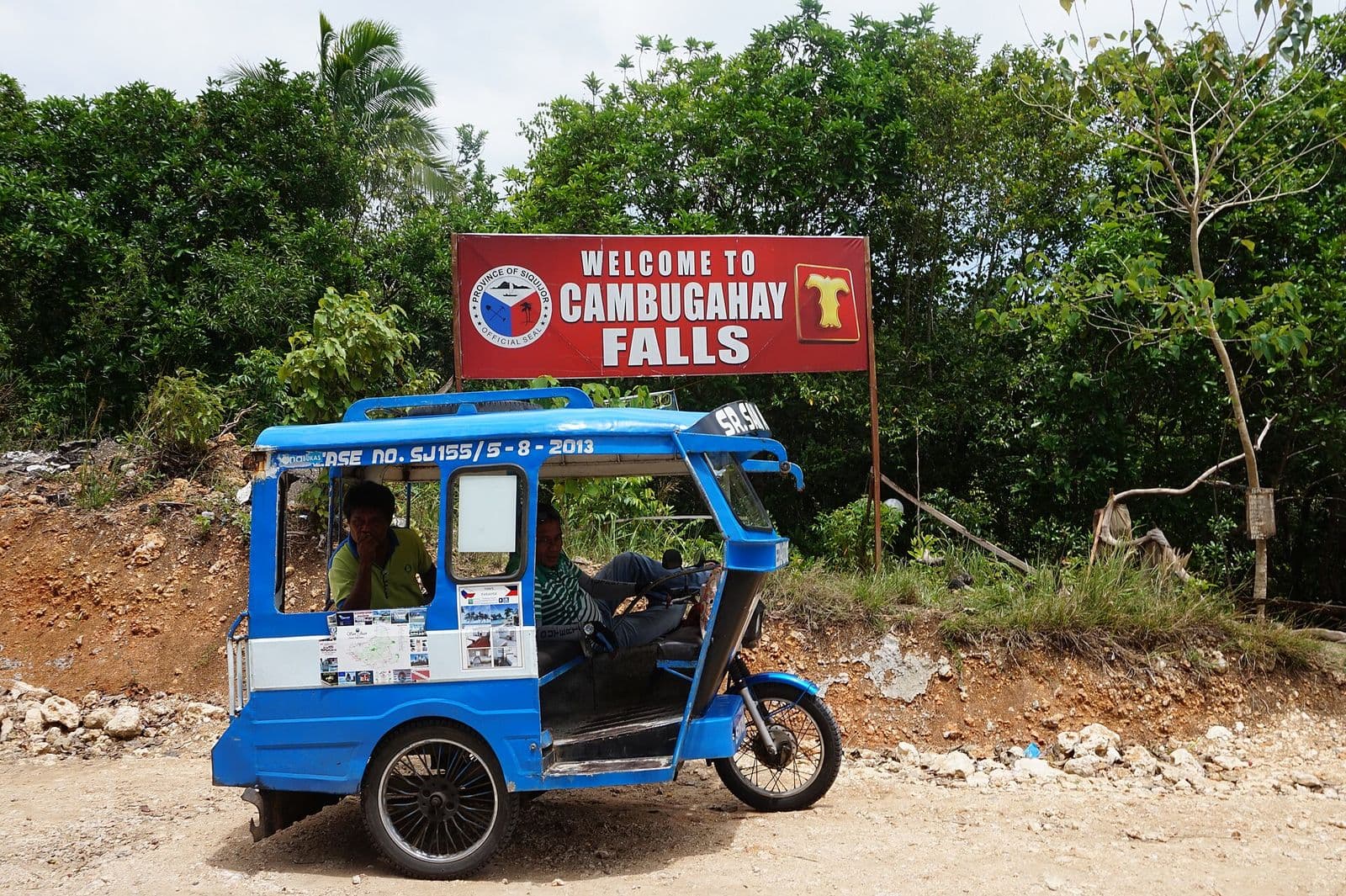
Photo: Harry Fozzard, CC BY 2.0 via Wikimedia Commons
If you would rather not ride, hire a tricycle for the day. Expect ₱1,000 to ₱2,500 for the vehicle, depending on how many stops you want and how many of you there are. Bigger groups can take a multicab, a small van-like jeep, for about ₱3,000 a day. Tricycles and habal-habal (motorbike taxis) also cover short hops between towns.
A full loop with stops at Cambugahay, Lazi and Salagdoong is a long day. Split it over two and you will enjoy it more. Top up with fuel in the town centres.
Where to Stay in Siquijor
Where you sleep matters more here than on bigger islands. The coast road is the only way around, so every day trip starts from your door.
San Juan
San Juan on the west coast is where most visitors stay, and where you should stay on a first trip. It has the most resorts, hostels and places to eat, the best sunsets, and short rides to Paliton Beach and the Tubod sanctuary.
Siquijor town
Siquijor town makes sense if you arrive late or leave early, since the main port is here. It is a working town rather than a beach base, and its Sunday market is the biggest on the island.
Larena
Larena on the north coast is quieter and more local, with its own port, a big supermarket and a few beachfront stays around Sandugan. It is usually the cheapest town to sleep in.
Lazi and Maria
Lazi and Maria on the south and east are the quietest options, close to Cambugahay Falls and Salagdoong Beach. Food choices within walking distance are thin.
Rooms get short in peak season, so book early for Holy Week and the Christmas holidays. Power cuts happen across the island, so a place with a generator is worth paying a little more for.
Things to Do in Siquijor
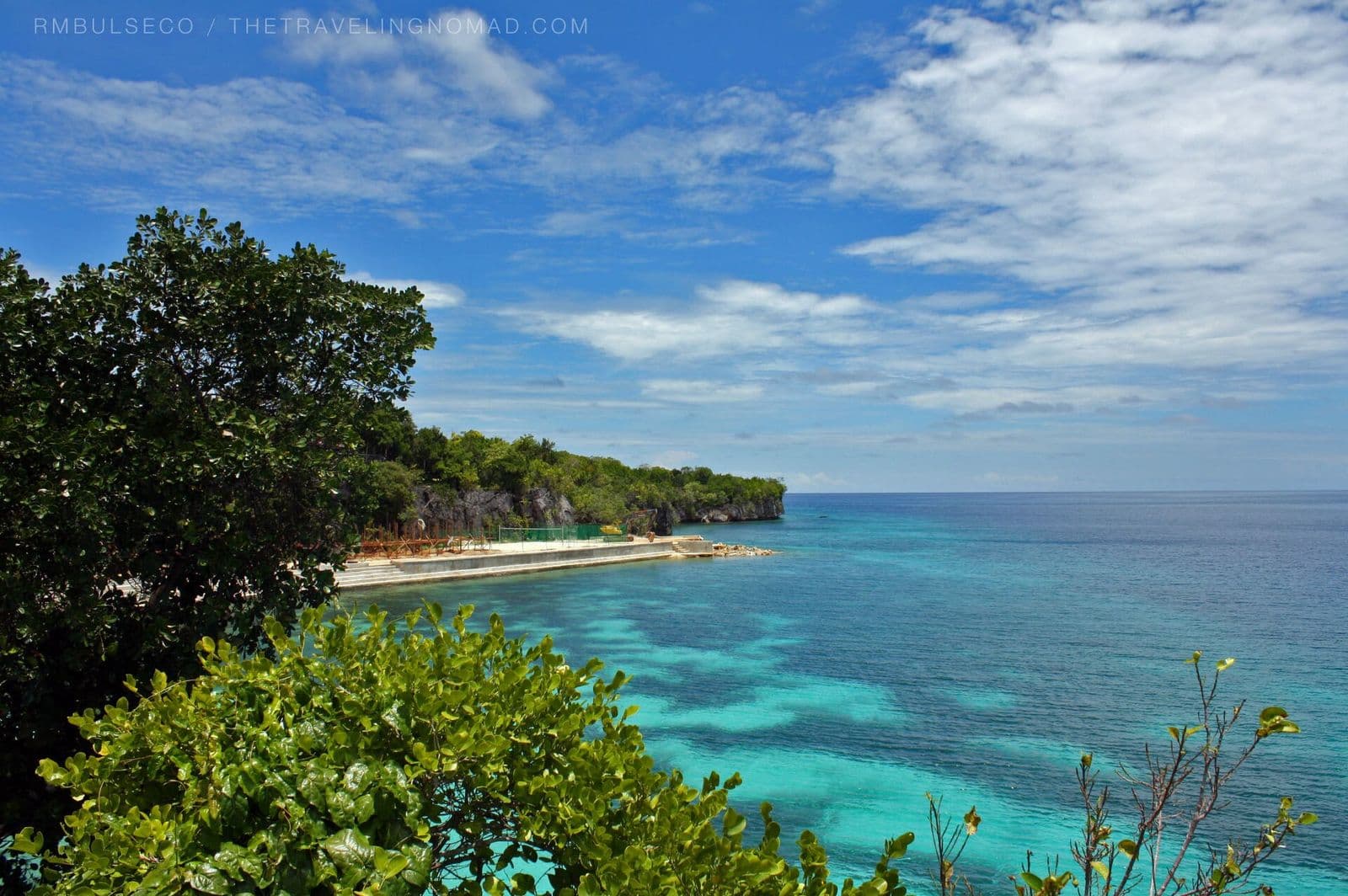
Photo: RM Bulseco, CC BY 2.0 via Wikimedia Commons
Cambugahay Falls
The island's best-known waterfall, in Lazi: three tiers of turquoise pools with rope swings and bamboo rafts. Entry is about ₱50, so bring small bills. Be there at the 8am opening, because the tour vans roll in mid-morning. See the Cambugahay Falls guide.
Salagdoong Beach
A public beach resort in Maria with a cliff platform of about 7 m over deep water, lower jumps and a white-sand cove. Entry is ₱50 plus ₱20 to park, alcohol isn't allowed on the beach, and water shoes help with the coral bits. See the Salagdoong Beach guide.
Paliton Beach
A short, palm-backed beach near San Juan and the island's classic sunset spot, ₱20 plus ₱20 parking. Walk around the cliffs to Big Paliton if the main stretch is busy. See the Paliton Beach guide.
Lugnason Falls
A smaller waterfall in San Juan with a deep blue pool, a short forest walk and fewer people than Cambugahay. It costs ₱20, and you can ask at the entrance about the guided hike to Zodiac Falls behind it. See the Lugnason Falls guide.
Lazi Church and Convent
A coral-stone church from the 1880s, free to enter, and across the road one of the largest old convents in the country. The convent is now the Siquijor Heritage Museum and charges ₱20. Both are in the Lazi guide.
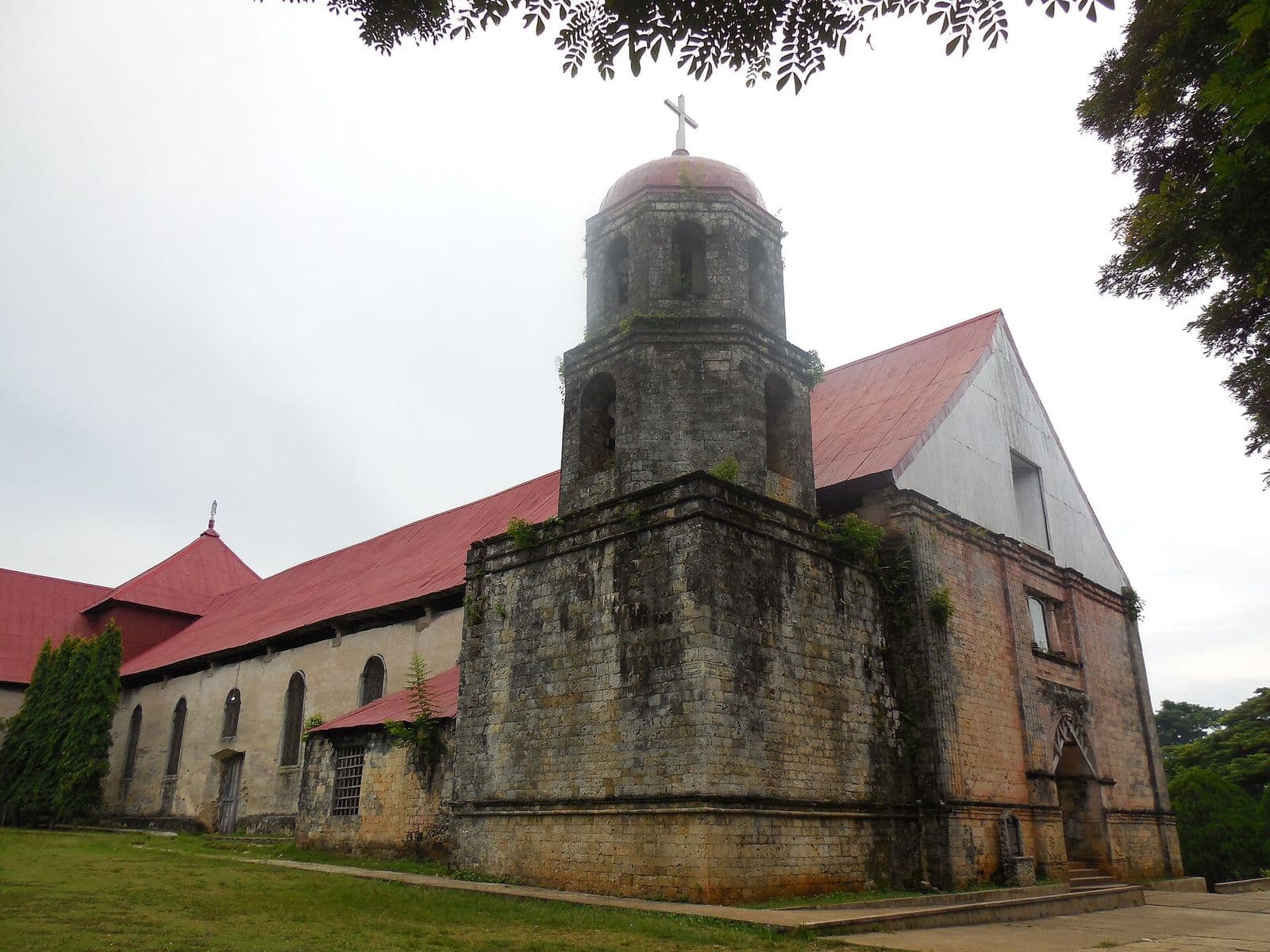
Photo: Lawrence Ruiz, CC BY-SA 4.0 via Wikimedia Commons
The old balete tree
A huge strangler fig in Campalanas, Lazi, put at 400 to 600 years old, with a spring-fed pool at its roots where small fish nibble your feet. Entry is ₱20. Go between 6am and 8am, before anyone else turns up.
Snorkelling at Tubod
The Tubod Marine Sanctuary off San Juan is the easiest reef to reach from shore, right beside Coco Grove. Entry is ₱100 and a mask and snorkel another ₱100, and it is open 6am to 9pm. You can swim the sanctuary, but Coco Grove's beach is for its guests.
Siquijor's Healers and the "Mystic Island" Label
Siquijor is known across the Philippines for its mananambal, traditional folk healers who use herbs, oils and prayer. Plenty of Filipinos grew up on stories about the island, and some still come here to see a healer. The darker sorcery tales are mostly folklore, and locals are tired of hearing about them.
The tradition is most visible in Holy Week. Healers gather plants on the Fridays of Lent, and the free Healing Festival runs Wednesday to Saturday of Holy Week at Mt Bandilaan National Park, with the main potion-making on Black Saturday. The 2026 festival ran 1 to 4 April, and the next is set for 24 to 27 March 2027. Barangay San Antonio in Siquijor town is also traditionally linked with the healers.
If you visit a healer, treat it like any other spiritual or medical practice. Ask before taking photos and don't treat it as a show. A healer is not a replacement for a doctor if you are unwell.
Where to Eat in Siquijor
Most restaurants are in San Juan, strung along the coast road. Elsewhere it is carinderias (small canteens serving rice meals) and resort restaurants. Many places are cash only.
Baha Ba'r in Maite, San Juan, is the long-running favourite, with a garden, a sunset deck and live acoustic music on Friday nights alongside a lechon and seafood buffet. Reviews are mixed but the place is reliably busy. For cheap and fast, Roadside Diners does chicken inasal with rice for ₱135. Dolce Amore does proper Italian at higher prices, and Luca Loko is the bowls and vegan stop.
Small places close for a day each week or during the rainy months. Check recent reviews and opening hours before you ride out for dinner.
Best Time to Visit Siquijor
The dry season runs roughly November to May, and March and April usually bring the driest weather and the clearest water. That is also when the ferry crossing is calmest.
The rest of the year is wetter, and storms don't keep to a neat calendar. Typhoons in late October and early November 2025 stopped boats and closed tourism businesses for days, and a July 2026 storm cancelled Dumaguete crossings. Check PAGASA forecasts and ferry status before you travel, and leave a spare day at the end of your trip.
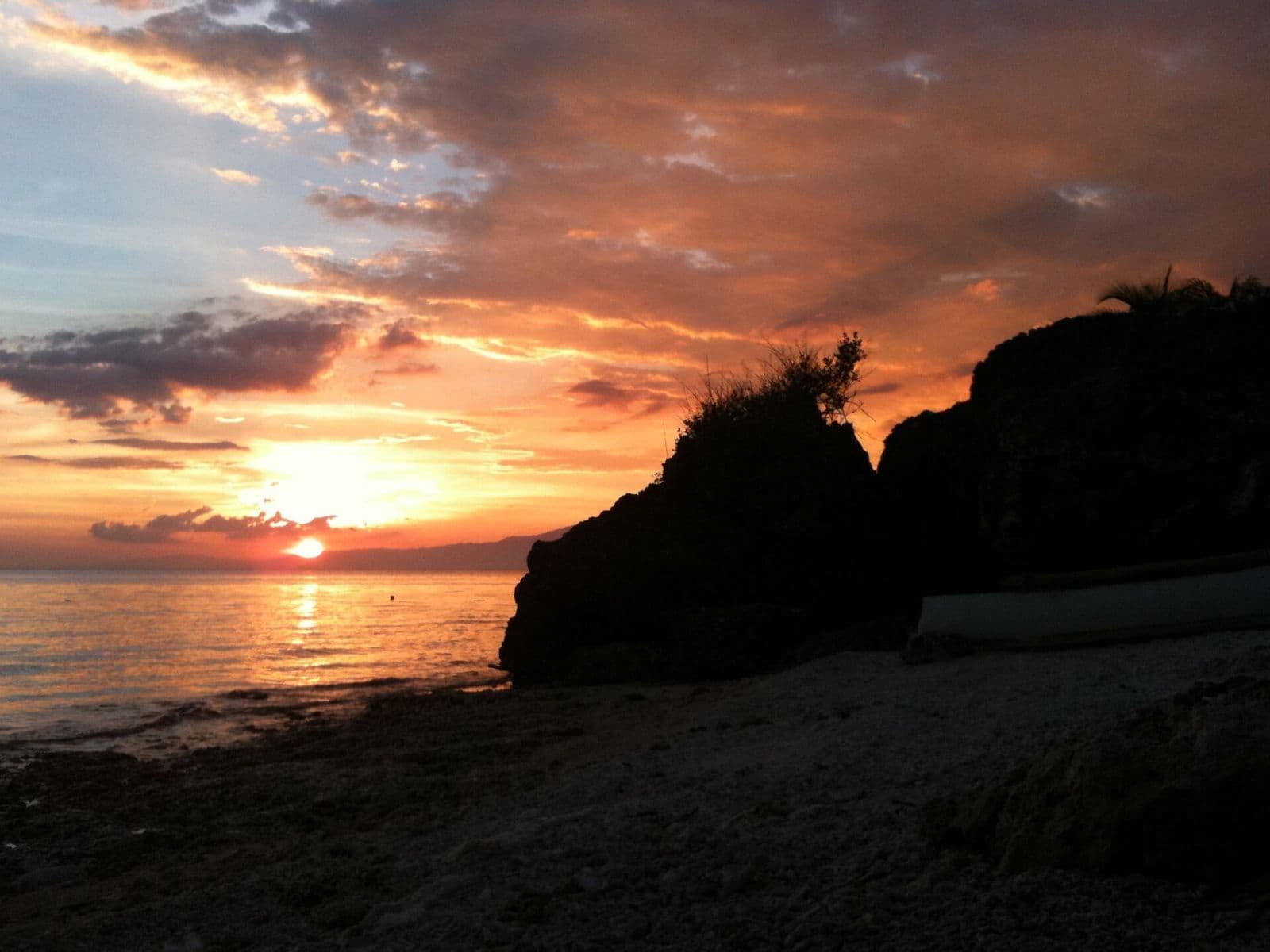
Photo: Robert Breivik, CC BY-SA 3.0 via Wikimedia Commons
Holy Week is the busiest week of the year, with full boats and higher room rates, and the Christmas to New Year stretch is close behind. If you can, come outside those dates.
Practical Tips for Siquijor
Cash
Entrance fees, parking, rope swings and most small restaurants are cash only. Carry ₱20 and ₱50 notes. There are ATMs in San Juan, Larena and Siquijor town, but foreign cards pay about ₱250 to ₱300 per withdrawal, so bring a buffer.
Fees add up
Each stop is cheap, usually ₱20 to ₱100. A full day of stops plus parking and extras still reaches a few hundred pesos per person.
Power and Wi-Fi
The island runs on a diesel plant and outages are regular. Wi-Fi drops when the power goes, so Siquijor is a poor pick for full-time remote work.
Respect at churches
The churches in Lazi, Maria and Siquijor town are working parishes. Cover shoulders and knees if you go inside, and keep quiet during Mass.
Waterfalls after rain
After heavy rain the falls run fast and murky. Skip the rope swings and jumps until the water clears, and wear water shoes on the rocks.
Siquijor FAQ
How many days do you need in Siquijor?
Two full days lets you ride the whole island without rushing. Three or four gives you slow beach afternoons and time to snorkel at Tubod.
Is Siquijor safe?
Yes, it is a calm and friendly island. The real risks are scooter accidents, slippery rocks at the waterfalls and strong currents at some beaches.
Can you fly to Siquijor?
Yes. Sunlight Air flies nonstop from Cebu three times a week, in about 55 minutes. Check the current schedule before you book.
What is the cheapest way to get to Siquijor?
From Dumaguete, a slower boat is usually cheapest, so compare fares at the port. From Cebu, the slow Lite Ferries boat to Larena costs ₱635 to ₱920.
Do I have to pay a fee to leave Siquijor?
Yes. Since February 2026 there is a ₱50 Tourism Ecological Fee per person, paid when you leave. Seniors and students pay ₱40.
Which town is best to stay in?
San Juan, for most first-time visitors. Pick Siquijor town for early boats, and Lazi or Maria for quiet.
Explore Siquijor
Town guides: San Juan, Siquijor town, Larena, Lazi, Maria and Enrique Villanueva.
Attractions: Cambugahay Falls, Salagdoong Beach, Paliton Beach, Lugnason Falls.